
The Story of L’As du Fallafel
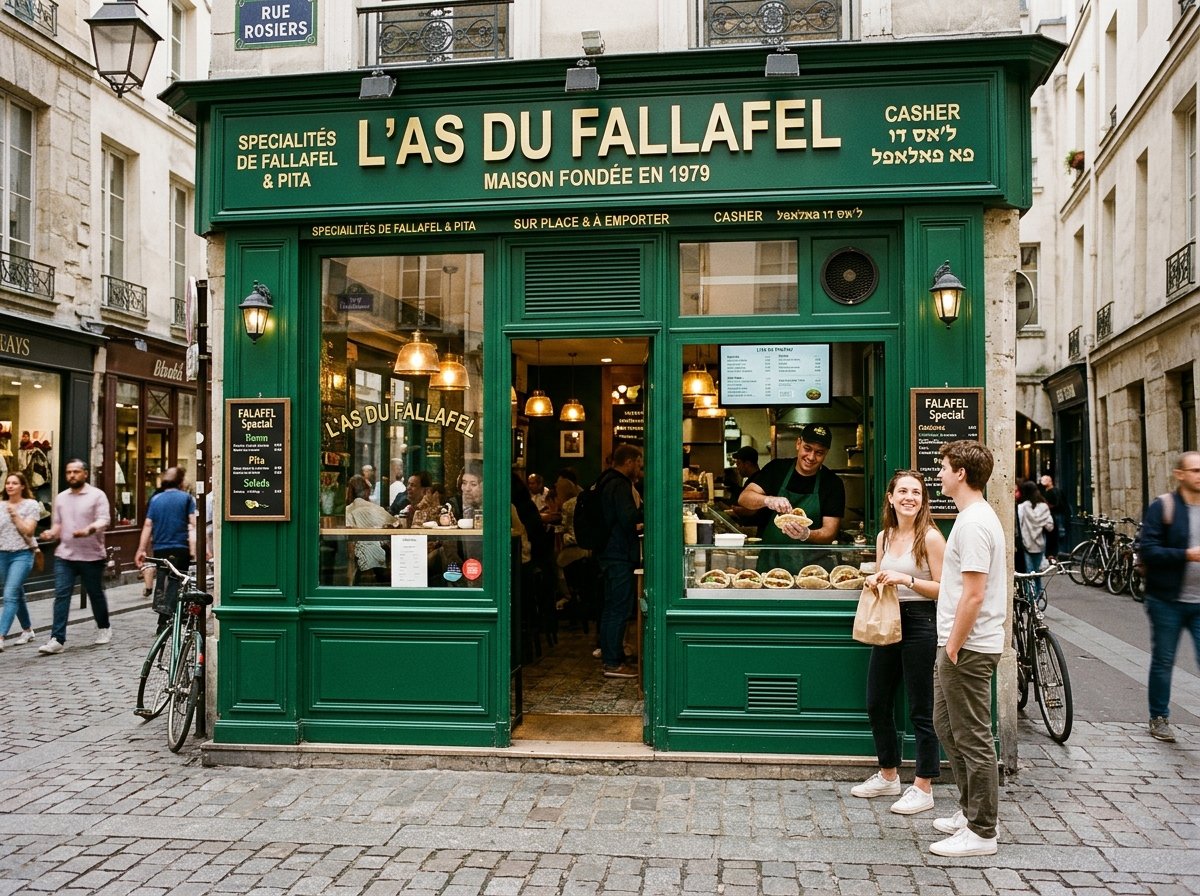
From a humble storefront in the historic Jewish Pletzl in 1979 to an internationally celebrated gastronomic landmark on Rue des Rosiers.
A Family Legacy on Rue des Rosiers
L’As du Fallafel was established in 1979 by members of the Haddad family, of Tunisian Jewish heritage. When they opened their modest doors at 34 Rue des Rosiers, the street was already known as the beating heart of Paris’s Jewish quarter, historically nicknamed Le Pletzl ("the little square" in Yiddish).
While earlier 20th-century immigrant waves brought Ashkenazi bakers, pickle-makers, and kosher delis from Eastern Europe, the arrival of Sephardic Jewish communities from North Africa in the 1950s and 60s introduced vibrant Mediterranean flavors: cumin, coriander, deep-fried aubergines, harissa chili paste, and freshly ground chickpea falafel.
Led by Daniel Haddad and his brothers (including Isaac and Yoni), L’As du Fallafel perfected a unique assembly technique that quickly distinguished them from other vendors in Paris.
What Made L’As a Global Phenomenon?
Three core elements explain why thousands of locals and international travelers queue daily on the cobblestones of the 4th Arrondissement.
Continuous Batch Frying
At L’As, falafels are never held under heat lamps. Raw seasoned chickpea paste is scooped and dropped straight into roaring vegetable oil, producing a blistering, crisp crust with a steamy, fragrant green herb center that stays fresh and never dry.
The Fried Aubergine Layer
The inclusion of velvety, fried eggplant slices was a game-changer. Salted, fried until deeply golden, and layered into the pita pocket, it melts into the falafel spheres, creating a rich contrast with crisp shredded red cabbage.
High-Speed Queue Mastery
The restaurant operates with orchestra-like efficiency. Line-runners take orders and swipe payment cards 20 people deep in the street, ensuring that hot, freshly wrapped pitas are delivered to your hands moments after you reach the window.
The Historic Jewish Quarter (Le Pletzl)
Rue des Rosiers ("Street of the Rosebushes") traces its lineage to the 13th century alongside the medieval ramparts of King Philippe Auguste. For centuries, it has served as the social and culinary core of Parisian Jewish life.
Today, Rue des Rosiers represents a vibrant coexistence of traditional kosher bakeries (famous for braided challah, cheesecake, and strudel), historic synagogues designed by Hector Guimard, contemporary fashion boutiques, and lively Mediterranean street food stalls.
Cultural Heritage Note: To respect the neighborhood’s religious heritage, visitors are encouraged to be mindful of Shabbat observance on Friday evenings and Saturdays, when most Jewish-owned businesses on Rue des Rosiers close their shutters.