
The Story of Rue des Rosiers: From Medieval Rosebushes to Le Pletzl & World-Famous Falafel
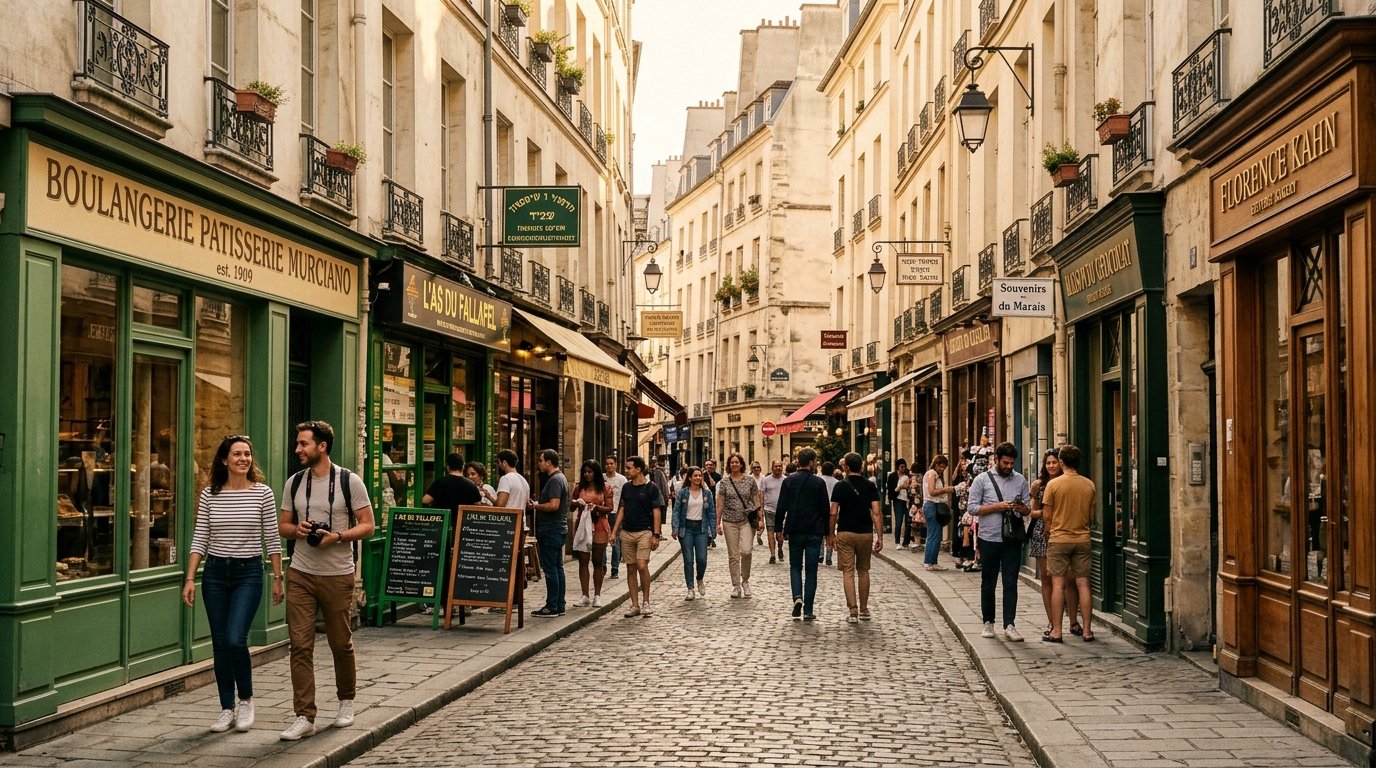
Few Parisian streets possess a history as layered, resilient, and flavorful as Rue des Rosiers. Nestled within the labyrinth of the 4th Arrondissement, this narrow thoroughfare—barely wide enough for two delivery vans to pass—has survived eight centuries of urban upheaval, royal decrees, and cultural migrations to emerge as one of the most vibrant culinary destinations in Europe.
The Medieval Rosebushes Along King Philippe Auguste's Wall
The street’s poetic name, Rue des Rosiers ("Street of the Rosebushes"), dates back to the year 1230. During the reign of King Philippe Auguste, a formidable defensive stone wall was constructed around Paris. Just inside the ramparts grew wild rose gardens tended by local monks and residents. Though the flowers are long gone, remnants of the Philippe Auguste ramparts can still be seen today tucked within the hidden courtyards of the nearby Jardin des Rosiers.
The Birth of Le Pletzl: The Ashkenazi Heritage
Starting in the late 19th century and accelerating through the early 1900s, Jewish refugees fleeing persecution and pogroms across Eastern Europe (Poland, Russia, Romania, and Lithuania) settled in the Marais. They gathered around Rue des Rosiers and the Place Saint-Paul, establishing a close-knit Yiddish-speaking quarter affectionately christened Le Pletzl (Yiddish for "the little plaza").
The street filled with kosher butcheries, bookshops selling Hebrew texts, and bakeries producing braided challah, poppy-seed pastries, and rye sourdough. Historic Jewish community life flourished despite profound hardships.
The Sephardic Wave & The Arrival of Falafel (1950s–1970s)
Following the decolonization of North Africa in the 1950s and 1960s, a new influx of Sephardic Jews arrived from Tunisia, Algeria, and Morocco. They brought with them an entirely different culinary vocabulary: warm toasted cumin, roasted coriander seeds, pungent garlic, fiery red harissa paste, and golden, deep-fried chickpea falafel.
In 1979, the Haddad family opened L’As du Fallafel at number 34. What began as a modest neighborhood storefront soon pioneered a legendary innovation: layering deeply fried, creamy eggplant into the pita alongside hot falafel spheres, crunchy marinated red cabbage, and rich sesame tahini.
Word of this extraordinary sandwich spread beyond Le Marais, drawing students from the Sorbonne, international artists, culinary critics, and global travelers. Today, Rue des Rosiers stands as a living testament to multicultural Paris, where centuries of Jewish heritage continue to be celebrated through the universal joy of extraordinary street food.